

What happens when your sense of safety disappears overnight ~ and your body never forgets?
I was ten years old when my nervous system learned a lesson it would carry for years: safety can vanish.
I grew up on a rice farm during Australia?s 1980s interest rate crisis. When interest rates climbed towards 20%, many farming families were pushed to the brink. Ours was one of them.
Our farm, our animals, and our home were repossessed by the bank. My family ~ along with others in our community ~ were interviewed on national television as part of what was happening across rural Australia.
But what my ten-year-old body absorbed wasn?t economics.
It absorbed danger.
It absorbed the loss of freedom and identity as a ?farm girl.?
Home was no longer guaranteed.
Belonging became unstable.
Safety could disappear overnight.
And this is what I mean when I say:
money is never just about money.
When the Body Learns Before the Mind Understands
Here?s the thing ~ children don?t process financial crises in logical terms.
They don?t think: ?This is an economic downturn.?
They feel: ?Something isn?t safe-enough.?
Research in developmental psychology shows that early experiences of instability can shape how the nervous system perceives safety well into adulthood.?
For many Australian families during that period, this wasn?t isolated. The 1980s interest rate surge saw thousands of farms under financial pressure, with some losing generational land and livelihoods.?
But for a child, it?s not about the statistics.
It?s about what the body encodes.
As trauma expert Bessel van der Kolk says: ?The body keeps the score.?
Practical reflection: When you think about money today, does your reaction feel current ~ or does it feel familiar?
Trauma Is an Adaptation ~ Not a Flaw
Let?s gently reframe something important.
Trauma is not the event itself.
Trauma is the nervous system?s adaptation to overwhelming threat.
My body did not become vigilant because it was fragile.
It became vigilant because it was intelligent.
It learned:
-
Money equals survival
-
Security is not permanent
-
Stability must be protected
-
Loss can happen quickly
That bracing response wasn?t dysfunction.
It was protection.
Neuroscience research shows that the brain and body rapidly adapt to perceived threat, prioritising survival over long-term regulation.?
As Gabor Mat? explains: ?What we call personality is often a set of coping mechanisms.?
Practical reflection: What if your response to money isn?t a problem ~ but a pattern that once kept you safe?
When the Threat Passes ~ But the Body Doesn?t Know
Here?s where it gets tricky.
The nervous system is designed to adapt quickly to danger.
But it doesn?t always update just as quickly when the danger is over.
So the vigilance stays:
-
The scanning
-
The urgency
-
The need to stay ?on top of things?
Even when life looks stable on the outside.
Research in trauma and stress physiology shows that chronic activation of the stress response can persist long after the original threat has passed.?
As Deb Dana says: ?Your nervous system is always asking: Am I safe-enough??
Practical reflection: Do you feel like you can rest around money ~ or does part of you stay alert?
Financial Anxiety Is Often a Survival Memory
If you:
-
Overwork to feel safe-enough
-
Panic when savings decrease
-
Feel constant urgency to ?get ahead?
-
Struggle to relax around money
It may not be about your current situation.
It may be your body remembering a time when money meant survival.
Studies show that financial stress is one of the most persistent forms of anxiety, often linked to deeper emotional and environmental experiences rather than current income alone.?
Your nervous system isn?t broken.
It?s loyal.
And loyalty to survival is powerful.
As Peter Levine says: ?The body?s job is to keep you alive, not to make you happy.?
Practical reflection: What if your anxiety isn?t overreacting ~ but remembering?
What Actually Helps the Body Update
This is where the work begins.
Not by forcing change.
Not by overriding your responses.
But by creating new experiences of safety.
Because insight alone doesn?t shift survival patterns.
The shift is physiological.
The nervous system needs to experience:
-
Safety without over-managing
-
Stability without constant vigilance
-
Rest without consequence
Research in somatic therapies shows that new, embodied experiences are key to rewiring stress responses and creating lasting change.?
Practical reflection: Where can you allow even 5% more softness around money ~ without pushing yourself?
What I learned at ten years old made sense for the environment I was in.
It helped me survive.
It helped me adapt.
But survival patterns aren?t always meant to be permanent.
If any part of this resonates ~ if money feels heavier than it ?should,? or safety feels just out of reach ~ there?s nothing wrong with you.
Your system learned well.
And it can also learn something new.
References
-
Shonkoff, J. et al. (2012). The lifelong effects of early childhood adversity.
-
Reserve Bank of Australia. (Historical data on 1980s interest rates and economic conditions).
-
Porges, S. (2011). The Polyvagal Theory.
-
McEwen, B. (2007). Physiology and neurobiology of stress and adaptation.
-
Australian Psychological Society. (2023). Stress and wellbeing in Australia survey.
-
Levine, P. (2010). In an Unspoken Voice.
- About Sonia
- More Space to Pause
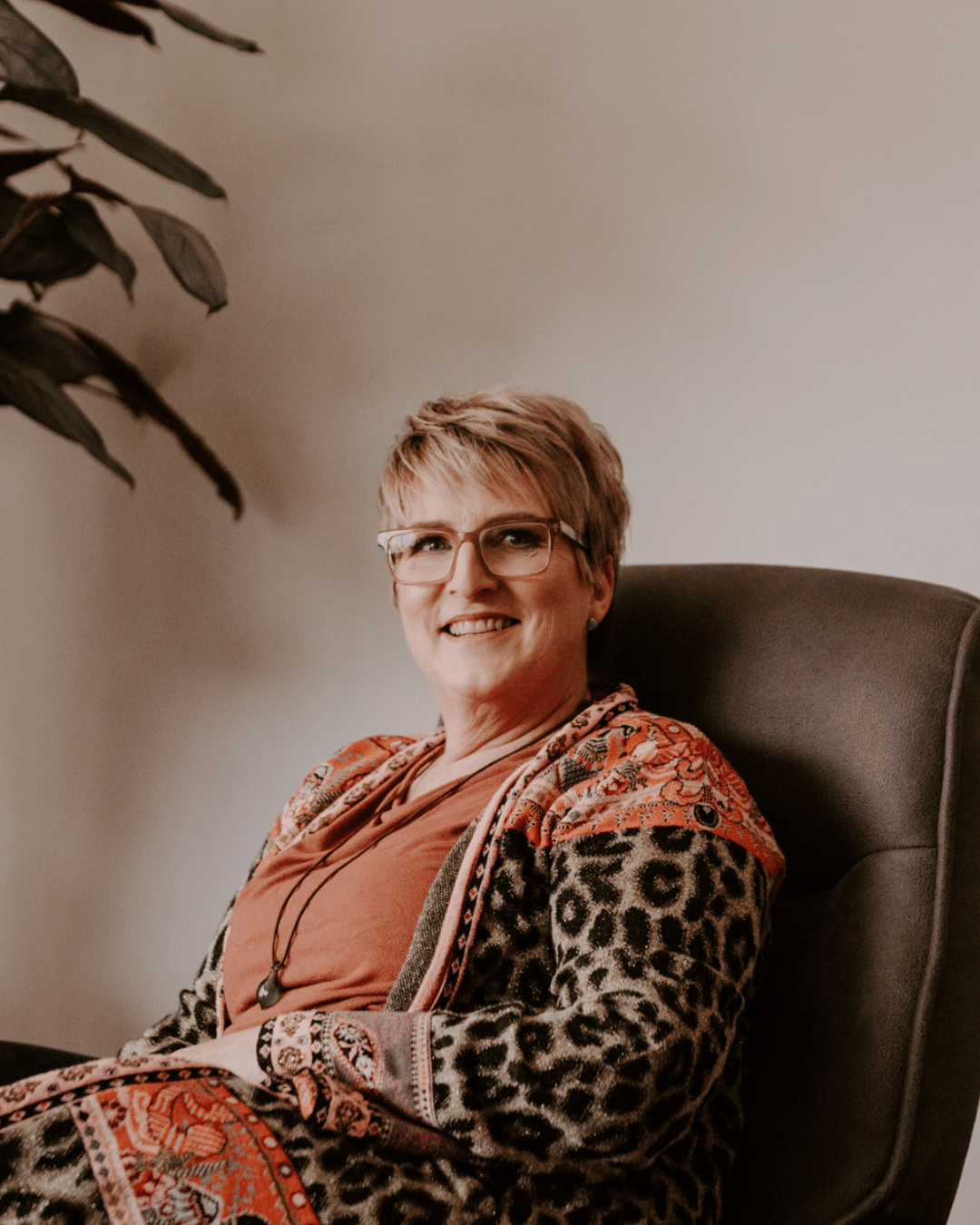
Sonia?is an?Integrative Money Trauma Therapist, Accredited Social Worker (AASW), Founder of the N.E.R.V.E. Method? and Author of Who Ever Said? “It’s Just Money, Honey?”, ?whose work sits at the intersection of money, trauma, and the nervous system. Supporting capable, caring professionals who are stuck in financial stress despite everything they know and everything they’ve tried. With a Master of Social Work, a Bachelor of Behavioural Science, Certified Practitioner in the Trauma of Money Method?, and advanced clinical training in Relational Integrative EMDR, Brainspotting, Root Cause Therapy, and Resource Therapy, her approach is shaped not only by professional formation but by her own lived experience of inherited money patterns. She works with healthcare professionals, therapists, and practitioners globally who are ready to do this work at a nervous system level, and in-person in Penguin, Tasmania ~ Australia a destination therapy location on the northwest coast where the pace of the place holds the work.
If this resonates, a good place to begin is the reflective guide?Money, Safety & the Body: The Missing Link ?, or explore working together at soniaskewes.com.au/reach-out/