
Why Can’t I Do Both?
Have you ever noticed how quickly the world asks us to choose? Be practical or be creative, ambitious or kind, focused on one thing or risk being seen as unrealistic. For many of us, these choices arrive so early and so often that we stop questioning them, and we begin editing ourselves before anyone else has the chance.
Recently, while watching a documentary series about Kylie Minogue’s career, one particular moment stopped me. As a young performer, she was asked whether she intended to focus on acting or singing. The interviewer framed it as a choice, one or the other. And Kylie’s response was simple.
“Why can’t I do both?”
I found myself smiling and quietly cheering, because in that moment I wasn’t just hearing a young performer answer a question, I was witnessing something much deeper. I was witnessing enoughness.
Not perfection, not certainty, not arrogance, but the quiet confidence that says I don’t have to shrink myself to fit someone else’s expectations. And perhaps that’s something many of us have quietly forgotten.
The boxes we learn to live inside
Most of us are taught, directly or indirectly, that life works best when we stay inside clearly defined boxes. Choose a career, choose a role, choose an identity, choose a path. The message sounds sensible on the surface, but underneath it often sits another message entirely: don’t be too much, don’t ask for too much, don’t want too much, don’t become too much.
Over time those messages become internalised. We stop exploring possibilities because they don’t fit neatly into a category, we abandon interests that bring us joy, and we limit ourselves before life ever does. The saddest part is that many of these limitations were never ours to begin with.
Notice where you’ve accepted a false choice in your own life. Is it really either-or, or have you simply stopped considering other possibilities?
Why so many women still shrink themselves
Kylie’s response stayed with me because it challenged something many women have been taught for generations: stay manageable, stay grateful, stay realistic, stay easy to accommodate.
For many women, the fear isn’t simply about success. It’s about visibility, because visibility often comes with a cost,more scrutiny, more judgment, more expectations, more opinions from people who weren’t asked.
In my work I see this show up around earning more than almost anywhere else. A capable, intelligent, highly skilled woman may know exactly what she needs to charge, ask for, or pursue. And yet something inside her hesitates, not because she lacks ambition or ability, but because her nervous system has learned that more can feel unsafe. More income can unconsciously mean more responsibility, more visibility, more criticism, more pressure to perform, more expectations from others. So instead of asking “can I do this?”, the body quietly asks something else entirely: will it still be safe to belong if I do?
This is often an enoughness problem,a fear that becoming bigger, brighter, more successful, or more visible will somehow cost us connection, acceptance, or love. What struck me about Kylie was that she wasn’t asking for permission. She simply trusted herself enough to ask why not.
The next time you hesitate to pursue something you want, ask yourself whether you’re protecting your wellbeing, or protecting yourself from being seen.
When more feels unsafe
One of the most misunderstood barriers to growth is the assumption that everyone wants more: more money, more success, more opportunities, more visibility. Yet for many women, more can activate old fears like what if people judge me, what if I fail, what if I succeed and everything changes, what if I outgrow the relationships around me, what if people think I’ve changed.
These fears rarely announce themselves directly. Instead they show up as procrastination, overthinking, perfectionism, self-doubt, or endless preparation without action. From the outside it can look like a motivation issue, but from the inside it is almost always a safety issue.
The nervous system isn’t resisting success. It’s resisting what it believes success might cost.
When you find yourself stuck, try asking not “what’s wrong with me?” but “what is my system trying to protect me from?”
The difference between confidence and enoughness
Many people assumed Kylie was demonstrating confidence in that interview. I think it was something even deeper than that. Confidence often depends on outcomes, while enoughness exists before outcomes. Confidence says “I think I can do this,” but enoughness says “I am worthy whether I succeed or not.” Confidence can fluctuate, but enoughness becomes a foundation.
When we know we are good enough, safe enough, and worthy enough, we stop needing every decision to guarantee success. We become willing to try, to explore, to risk disappointment, and to trust ourselves. That’s where growth actually lives,not in certainty, but in self-trust.
Instead of asking whether you’re confident enough, ask whether you trust yourself enough to handle whatever happens next.
What Kylie really taught me
The more I sat with that moment, the more I realised it was never really about acting or singing. It was about refusing to accept limitations that didn’t belong to her, questioning assumptions, trusting instincts, and not shrinking.
How many times have we edited ourselves to make others comfortable? How many dreams have we quietly set aside because they didn’t fit neatly into a single category? How many opportunities have we declined because they made us more visible than we felt ready for?
Perhaps enoughness isn’t about becoming more. Perhaps it’s about reclaiming the parts of ourselves we’ve been taught to hide.
The freedom of “why not?”
There’s a real freedom in asking a different question. Instead of “who am I to do that?”, what if we asked “why not me?” Instead of “what if I fail?”, what if we asked “what if I grow?” Instead of “am I enough?”, what if we simply remembered that we already are.
The power of Kylie’s response wasn’t that she knew exactly how everything would unfold. It was that she didn’t allow someone else’s assumptions to define what was possible. And perhaps that’s what enoughness really looks like in practice: not believing you can do everything perfectly, not believing you have all the answers, but believing you are worthy enough to try, safe enough to be seen, good enough without proving it, and free enough to ask why not.
Because sometimes the most powerful thing we can do is stop shrinking and start trusting the person we already are.
- About Sonia
- More Space to Pause
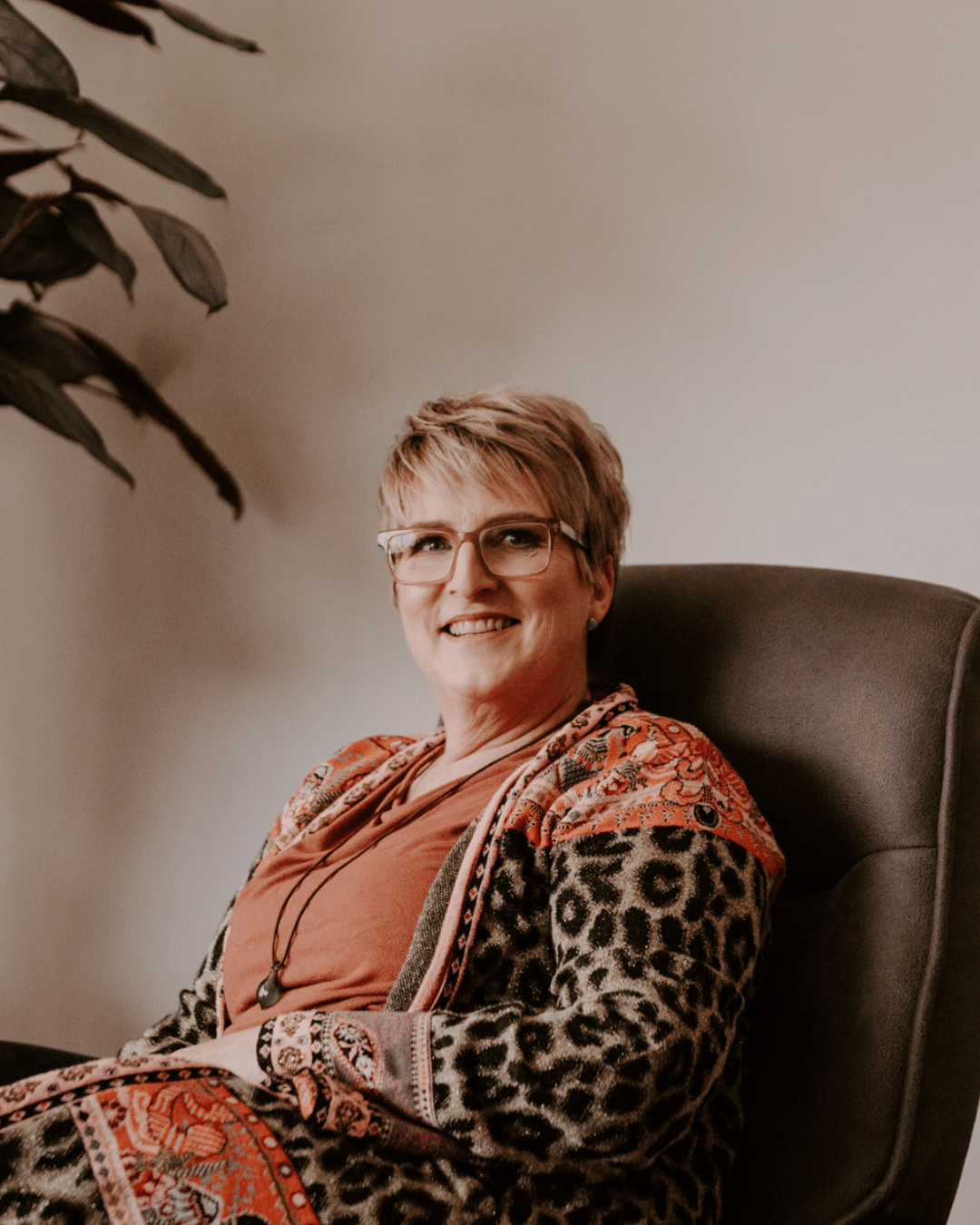
Sonia?is an?Integrative Money Trauma Therapist, Accredited Social Worker (AASW), Founder of the N.E.R.V.E. Method? and Author of Who Ever Said? “It’s Just Money, Honey?”, ?whose work sits at the intersection of money, trauma, and the nervous system. Supporting capable, caring professionals who are stuck in financial stress despite everything they know and everything they’ve tried. With a Master of Social Work, a Bachelor of Behavioural Science, Certified Practitioner in the Trauma of Money Method?, and advanced clinical training in Relational Integrative EMDR, Brainspotting, Root Cause Therapy, and Resource Therapy, her approach is shaped not only by professional formation but by her own lived experience of inherited money patterns. She works with healthcare professionals, therapists, and practitioners globally who are ready to do this work at a nervous system level, and in-person in Penguin, Tasmania ~ Australia a destination therapy location on the northwest coast where the pace of the place holds the work.
If this resonates, a good place to begin is the reflective guide?Money, Safety & the Body: The Missing Link ?, or explore working together at soniaskewes.com.au/reach-out/