

The Culture That Taught Me My Needs Didn’t Matter ~ and What That Did to My Nervous System
What happens when telling the truth costs you your sense of safety? This is the quiet, often invisible territory of moral injury ~ where doing the right thing comes at a personal cost, and where the nervous system learns, sometimes for decades, that honesty is a luxury it cannot afford.
Before the Workplace, There Was the Culture
Before I understood nervous system responses or moral injury or the clinical language of trauma, I understood Griffith ~ the heart of the Riverina NSW, Australia.
Griffith, NSW in the 1990s was a hard-working town in the truest sense of that phrase ~ not as a compliment people paid themselves, but as the unspoken operating system of an entire community. Worth was measured in what you could produce, what you could afford, and how well you kept up. The right car. The house on the hill. The annual holiday that proved you were doing well enough. Most families I knew had at least one parent working multiple jobs, sometimes three, because that was simply what the culture required if you wanted to be seen as someone who was trying hard enough.
There was no R U Ok Day in the 1990s. There was no language for burnout, or moral injury, or nervous system dysregulation, or the particular exhaustion of a teenager carrying adult responsibility without adult support. There was just: you either had what it took, or you didn’t. You worked, you kept up, you did not complain, and you absolutely did not ask for help ~ because asking for help meant you were not coping, and not coping meant you were not trying hard enough, and not trying hard enough was the quiet social failure nobody in that culture was willing to wear.
I was sixteen, living independently, supporting myself, and navigating an apprenticeship without the kind of family scaffolding that might have told me what I was allowed to need. The culture I had grown up in had already done its work ~ it had taught me that my needs were a luxury I could not afford, that asking for support was a character weakness rather than a human right, and that the only acceptable response to struggle was to work harder and say less.
When Integrity Meets a System That Cannot Hold It
From the outside, everything about my apprenticeship looked polished. My employer was admired ~ successful, awarded, respected in the industry. The salon was busy and beautiful and everything a young apprentice might feel fortunate to be part of.
But behind the scenes, the culture told a different story. Mistakes were not tolerated. Vulnerability was weakness. Rest was laziness. It was an environment where performance mattered more than people, where the appearance of excellence was non-negotiable, and where the cost of maintaining that appearance was quietly distributed among the people least equipped to carry it.
For a long time I carried it without question, because the culture I had grown up in had already taught me that carrying things without question was simply what you did. You showed up. You kept going. You did not make your struggle someone else’s problem.
So when I began to falter in the final year of a four-year apprenticeship ~ not dramatically, not rebelliously, just honestly ~ I did what I had been raised to believe was the right thing. I spoke up. I told the truth about what I was experiencing, not to cause disruption but simply because I thought honesty was safe, that integrity would hold me steady in an environment that I believed valued it.
It did not.
The Quiet Cost of Speaking Truth
The response to my honesty was not confrontation ~ it was quieter and in some ways more difficult to name. Exclusion from team events. Subtle distancing. The particular loneliness of being in a room full of people and knowing, without anyone saying a word, that something has shifted and will not be shifting back.
This is one of the reasons moral injury is so difficult to identify and so slow to heal ~ because it rarely arrives as an obvious violation. It arrives as a series of small, deniable moments that the nervous system registers as threat even when the mind cannot quite name what is happening. The body knows before the language catches up, and in an environment where speaking up had already proven costly, the body quickly learns to stay quiet.
One moment still stands out with particular clarity, I was 18. I was told to cover up and still come to work despite having clearly developed chickenpox. I was terribly unwell, contagious, and exhausted, but it was spring ~ peak wedding season in a busy, popular salon ~ and the message was clear, even without being spoken directly: the business came first, and my body was a logistical inconvenience rather than a human being with legitimate needs.
At eighteen, with no language for what was happening and no cultural framework that would have supported me in saying no, I complied. Because that is what the culture had taught me. That is what the environment was reinforcing. And that is what my nervous system encoded, quietly and completely, as the way things work ~ that your wellbeing is negotiable when someone else’s needs are on the line, and that the cost of having needs is the risk of losing the safety you depend on.
What the Nervous System Learns
Experiences like this do not stay in the past. They travel with us, encoded not as memories we consciously recall but as patterns the nervous system runs automatically ~ survival strategies that made complete sense in the environment where they were learned and continue operating long after that environment is gone.
You might recognise these patterns in yourself. The compulsion to overwork in order to feel safe enough. The difficulty of resting without guilt, as though stillness needs to be earned. The pressure to prove your value before you feel entitled to take up space. The way financial stress activates something in your body that feels older and larger than the immediate situation ~ because it is, because the nervous system is not responding to the present moment but to every previous moment that felt like this one.
This is what I now understand as the legacy of moral injury meeting cultural conditioning. It is not just the individual experience of a difficult workplace. It is the inherited belief system that arrives before the workplace does ~ the one that tells you speaking up is dangerous, that needing things is weakness, and that your worth is directly proportional to how much you can silently endure.
And it is worth naming that combination explicitly, because without naming it, these patterns feel like personal failings. With naming, they begin to make sense ~ as nervous system responses to real experiences in real environments, shaped by real cultural forces that were never yours to carry alone.
Why This Connects to Money
The same nervous system that learned it was not safe enough to speak up at work also shaped how I relate to money, to receiving, to rest, and to what I believe I am allowed to need financially.
Over-responsibility in relationships and over-responsibility around money come from the same root. The pattern of giving everything and keeping little, of working harder when things feel uncertain, of struggling to receive without immediately looking for the catch ~ these are not character flaws or financial ignorance. They are the nervous system doing exactly what it was trained to do in environments where safety was conditional on performance and silence.
For many of the healthcare professionals, therapists, and practitioners I work with internationally, this connection is the piece that changes everything. Not because it excuses the patterns, but because it explains them ~ and explanation is the beginning of choice.
When you understand that your financial responses are nervous system responses, rooted in real experiences and real cultural conditioning, the work stops being about trying harder and starts being about something far more sustainable ~ returning to the origin of the pattern, acknowledging what was inherited, and giving your nervous system permission to experience something different.
What Changes When You Name It
Naming moral injury matters. Naming cultural conditioning matters. Naming the nervous system patterns that grew from both of them matters ~ not because naming alone heals them, but because it stops you internalising them as evidence of your inadequacy.
When you can see that what happened in that workplace, or that family system, or that town with its entrenched ethic of endurance and silence, was never a reflection of your worth ~ when you can see it as a system that could not hold your humanity rather than proof that your humanity was the problem ~ something begins to shift.
Not all at once. Not without support. But genuinely, and in the body, which is the only place this kind of healing actually happens.
You were not too much. You were not weak for struggling. You were a human being responding to environments that had no framework for what you were carrying, in a culture that had not yet developed the language or the permission structures to call any of it what it was.
Your truth was never the problem. And the moment you begin to truly know that is the moment your healing begins.
- About Sonia
- More Space to Pause
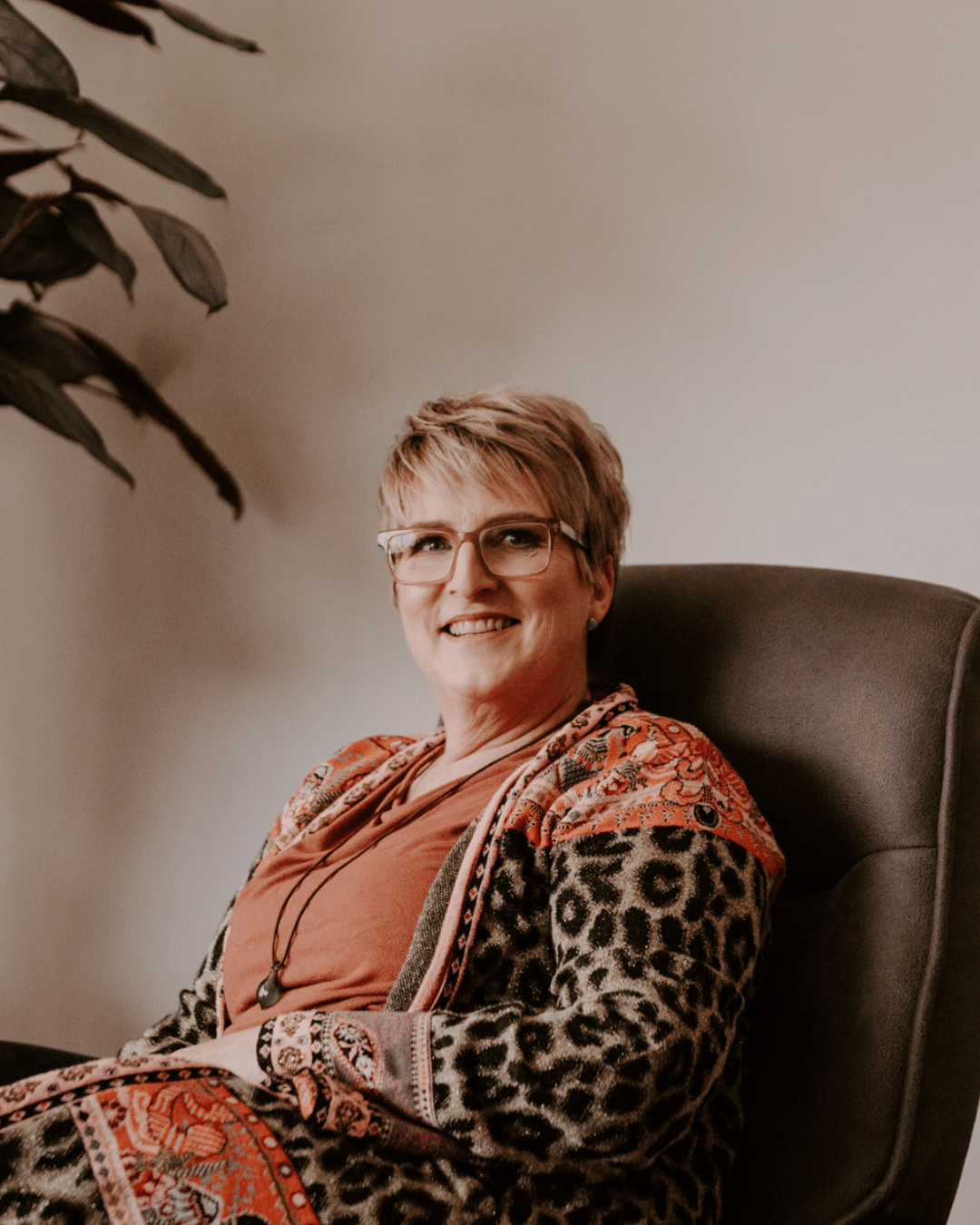
Sonia?is an?Integrative Money Trauma Therapist, Accredited Social Worker (AASW), Founder of the N.E.R.V.E. Method? and Author of Who Ever Said? “It’s Just Money, Honey?”, ?whose work sits at the intersection of money, trauma, and the nervous system. Supporting capable, caring professionals who are stuck in financial stress despite everything they know and everything they’ve tried. With a Master of Social Work, a Bachelor of Behavioural Science, Certified Practitioner in the Trauma of Money Method?, and advanced clinical training in Relational Integrative EMDR, Brainspotting, Root Cause Therapy, and Resource Therapy, her approach is shaped not only by professional formation but by her own lived experience of inherited money patterns. She works with healthcare professionals, therapists, and practitioners globally who are ready to do this work at a nervous system level, and in-person in Penguin, Tasmania ~ Australia a destination therapy location on the northwest coast where the pace of the place holds the work.
If this resonates, a good place to begin is the reflective guide?Money, Safety & the Body: The Missing Link ?, or explore working together at soniaskewes.com.au/reach-out/